Telegram has become a major hub for trading and cryptocurrency communities. This attracts young users, first-time investors, and people excluded from traditional finance. Education becomes a hook sometimes genuine, sometimes not.
The Myth of the Master Manipulator
In recent years, social media particularly Telegram has become a dominant space for trading and cryptocurrency discussions. Popular narratives often describe these spaces as hubs of manipulation, deception, and coordinated exploitation. Yet such explanations, while emotionally satisfying, may be analytically weak.
What if manipulation is not the primary driver?
What if perception, attention, and risk-based decision-making matter far more?
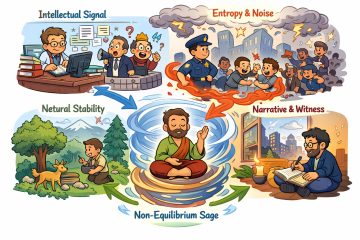
This article argues that Telegram trading groups function less as manipulation engines and more as attention-distribution systems operating under uncertainty, where outcomes are shaped by interpretation rather than control.
Telegram and the Architecture of Attention
Telegram differs structurally from most mainstream platforms. It emphasizes:
* Broadcast channels over algorithmic feeds
* Speed over verification
* Community replication over centralized moderation
These characteristics make it uniquely effective in environments where:
* Information is incomplete
* Decisions are time-sensitive
* Institutional trust is low
Such conditions mirror both speculative markets and conflict zones an overlap not coincidental, considering Telegram’s geopolitical roots and adoption patterns, particularly in regions such as Russia, where communication under risk has long been normalized. Here, attention is not entertainment. It is infrastructure.
Rethinking the Three Types of Groups
Telegram trading communities are often categorized into three groups: educators, signal sellers, and manipulators. This classification is useful—but only when reframed economically rather than morally.
1. Educators: Value Without Extraction
Genuine educators focus on:
* Market mechanics
* Risk management
* Psychological discipline
They reduce chaos and slow decision-making. Ironically, this makes them poor at monetization. They create value but extract little economic surplus. Their compensation is credibility, not cash.
2. Signal Sellers: The Attention Accountants
The dominant economic actors on Telegram are not manipulators, but aggregators of attention. Signal sellers monetize:
* Coordination
* Delegated decision-making
* Emotional reassurance
They do not need to be consistently correct. They need volume, repetition, and belief continuity. Losses are absorbed by churn; gains are amplified socially. This is not deception by default—it is attention accounting.
3. Manipulators: A Blurred and Often Unnecessary Category
The idea of a clear, omnipresent “manipulator” is overstated. In volatile markets:
* Random loss resembles intent
* Incompetence mimics conspiracy
* Volatility explains outcomes without villains
Manipulators exist, but they are neither necessary nor central to the ecosystem. Often, they are a retrospective explanation for discomfort rather than an observable structure.
Sharing Is Not Manipulation
A crucial distinction is frequently ignored: sharing information is not manipulation. A chart, a screenshot, or a market opinion does not compel action. Action arises from:
* Individual expectations
* Financial stress
* Social reinforcement
The same message can educate one user, mislead another, and excite a third. Meaning is not embedded in the message it is constructed by the receiver. In this sense, agency is distributed. Responsibility cannot be singular.
Why Losses Become Narratives of Blame
When losses occur, human psychology seeks coherence. Blame offers emotional compensation:
* “I was manipulated”
* “The market was rigged”
These narratives reduce cognitive discomfort. They also obscure a harder truth: most speculative loss occurs without malice, orchestration, or deception. Telegram does not need manipulation to function. Uncertainty alone is sufficient.
Attention, Risk, and Human Choice
Telegram’s success lies not in manipulation, but in its alignment with human behavior under risk. It amplifies attention, accelerates interpretation, and normalizes uncertainty. Signal sellers monetize coordination. Educators offer stability. Manipulators, where they exist, are peripheral rather than foundational. Ultimately, outcomes depend less on who shares information and more on how individuals perceive, interpret, and act upon it. Calling this manipulation may be comforting—but understanding it as attention economics under uncertainty is far more accurate.

Attention Without Manipulation: Telegram, Trading Communities, and the Economics of Perception


© 2026 varta.space. All rights reserved.
Comments
Add a comment