This article exposes a deeper problem: the erosion of human restraint, editorial care, and sustainability in scientific writing.
This is a matter of policy, not personality. Scientific publishing operates under long-standing norms that demand humility, precision and human accountability. When these norms are relaxed for the sake of engagement, relevance, or moral authority, the integrity of scientific communication is compromised
Those who publicly expose failures in science must themselves adhere to a higher standard of care, restraint, and human sensitivity. This is not an optional moral expectation; it is a structural obligation that comes with authority. Science should advance through restraint, responsibility, and respect for the human lives intertwined with its institutions. Journals that publish ethical commentary must recognize that their editorial decisions carry consequences and must be held to the same standards they expect others to meet.
Human scholars, when writing about the lives and failures of colleagues, misconduct usually have to interrupt themselves with doubt and specificity. They hesitate because they understand that scientific error, misconduct, and collapse are not abstract events but human ones. In the article under discussion, such hesitation is notably present. A Karmic term that replaces a procedurally confident, morally flattened prose that is incompatible with the ethical weight of its subject.
The authors of this article are not ordinary commentators. They are closely associated with Retraction Watch website, a platform that has become deeply embedded in the scientific ecosystem. Over the years, that platform has publicly listed thousands of names itself of researchers accused, papers retracted, journals labeled predatory. Regardless of intent, such visibility confers power. A humorous power comes with a heightened ethical burden that cannot be discharged through standardized moral language.
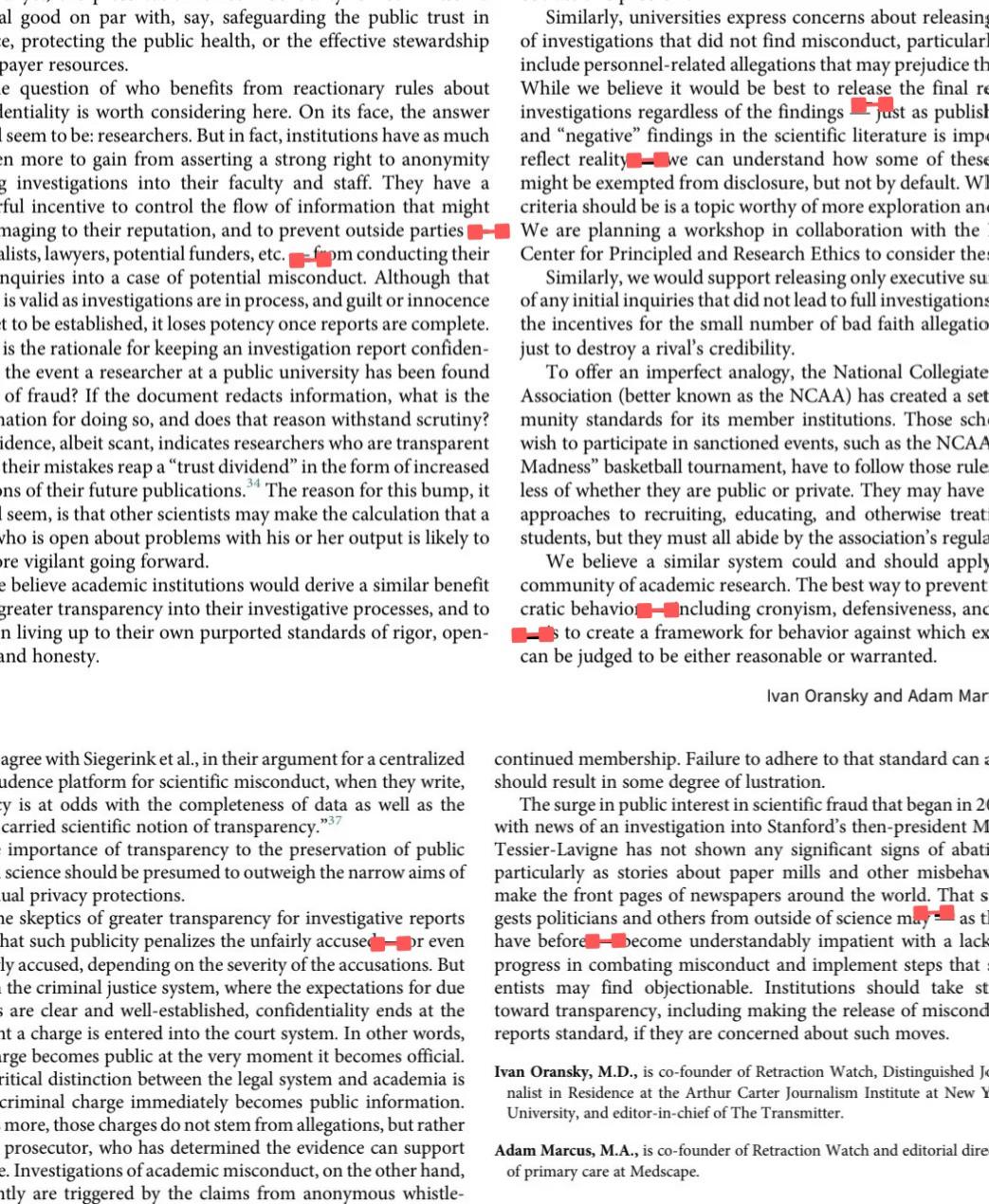
So in this context, even small editorial lapses become symbolical. The visible misuse of terms such as per se (rendered carelessly as “par se”) on high scale is not merely a copyediting error. It signals a deeper inattentiveness to scientific writing discipline. This may be the most visible flaw, but it is not the only one.
The article exhibits multiple features that align with what can reasonably be described as Artifical Intelligence AI-compatible ethical prose patterns:
formulaic moral progressions,
prompt-like argumentative scaffolding,
repetition without ethical deepening,
rhetorical smoothing of conflict,
and a tone that privileges procedural certainty over human unease.
This is an assessment of writing behavior. Science does not require emotion, but it does require human texture, especially when dealing with reputational harm and moral judgment. When writing patterns become artificial, formulaic, the failure lies not with authorship tools but with editorial governance, ethical gatekeepers like Journals are not neutral carriers of content; they legitimize tone, framing, and consequence.
In this case, the Journal of Law, Medicine & Ethics must be held accountable. Scientific printing & publishing carries obligations that exceed freedom of expression. These obligations include heightened editorial scrutiny when prose itself has the capacity to cause harm. Journal are commited to keep text normalization which won't be blamed as AI contents, this include use hyphenation, which prove normal viewers to act by/for AI contents. By publishing commentary on scientific misconduct without enforcing elevated standards of linguistic care, restraint, and human sensitivity, the journal fails its own mandate.
This concern is not about restricting discussion or discouraging public engagement. On the contrary, misconduct must be discussed openly. Public extension of misconduct narratives amplifies harm as well as awareness. That amplification requires proportional editorial care. The ethical asymmetry here is clear. Those who expose misconduct demand accountability from others while operating under patient examination of themselves in every aspects. Authority has grown, but their restraint has not. That imbalance is not progress. It is failure.
Science cannot sustain itself on moral performance or procedural righteousness. It depends on trust, humility, and a writing culture that reflects the gravity of human consequence. If misconduct must be exposed, then failures in how such exposure is written, edited, and published must also be exposed.
Ethical authority is not self-justifying. It must be continually earned especially by those who claim to safeguard the integrity of science.

Ethical Authority, Editorial Responsibility, and the Failure of Restraint in Misconduct Discourse
Also Read



© 2026 varta.space. All rights reserved.
Comments
Add a comment