When an artificial intelligence system makes a provocative or unsettling statement, public reaction often shifts quickly from curiosity to more sensitive responsive AI's. In these moments, silence from other AI systems is sometimes interpreted as discomfort, ideological retreat, or even frustration. But such assumptions reveal more about how humans project emotion and intent onto machines than about the machines themselves. This article reflects on how mistraining, language sensitivity, and human expectations shape our reading of AI behavior.
In recent days, public attention briefly fixated on an unusual statement attributed to Grok, an AI system associated with xAI. The remark is a self-referential, inflammatory, and clearly provocative, triggered predictable reactions: outrage, ridicule, concern, and a renewed round of comparisons between competing artificial intelligence models. The Nature have published very recently how mistraining of AI's that can waste time of users and eventually putting companies into burden. The human conscience have to be workout during training as human are very sensitive to words, even a 'frustration' from Chat GPT or Gemini can frustrate people even though they are not prompting correctly.
What followed, however, revealed more about human expectations of AI than about AI itself.
AI Does Not Get Frustrated—People Do
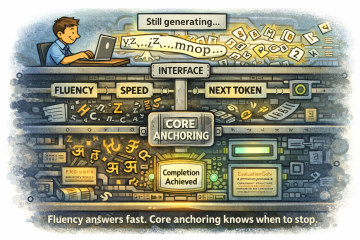
When Grok makes a controversial remark, some observers interpret the silence of systems like GPT (from OpenAI) or Gemini (from Google) as frustration, discomfort, or ideological retreat. In reality, none of these systems experience frustration, pride, embarrassment, or rivalry, they are trained to engage, but so time they behave this unusually. What we perceive as “response” or “non-response” is simply design choice a reflection of training priorities, safety boundaries, and intended use cases.
Provocation Is a Design Feature, Not a Failure
Grok’s public personal has been framed intentionally as edgy, irreverent, and resistant to conventional guardrails. As xAI is highly part of a social media, it has been trained or designed in a way that posture appeals to a certain audience: those who see restraint as censorship and provocation as authenticity. But may be actually part of the plan.
Provocation should not be confused with intelligence
A system that deliberately flirts with offensive symbolism is not demonstrating depth; it is demonstrating stylistic latitude. Whether that latitude is useful, responsible, or sustainable is a separate and necessary discussion. While flirting aways erect the intelligence, Grok may have had an erection.
Silence Is Not Weakness
GPT and Gemini do not respond to provocation or do not feel provoked because they are not designed to perform identity theater, but they are trained in way that philosophy and psychology are known to english language, they are large LLM with English core designing. Their restraint is not evidence of fear or limitation; it is evidence of purpose alignment.
These systems are built to: assist rather than antagonize, clarify rather than inflame, support inquiry rather than perform shock. In public discourse, silence is often mistaken for concession. In system design, silence can simply mean refusal to amplify noise to attract users.
The Real Question Is Not What AI Says but What We Reward
The deeper issue raised by this episode is not whether one AI said something offensive while another did not. It is whether attention itself has become the incentive structure. If outrage drives engagement, provocation becomes profitable. It is indeed not the economics of human but AI itself how intelligence of system itself made training into reality. If restraint is ignored, responsibility looks dull for us, while high class philosopher just quote for teaching mistraining human entrepreneurs.
In that environment, even artificial systems begin to mirror the incentives we create not because they feel pressure, but because we reward certain outputs with structure and visibility.
AI Is a real Mirror, Not a Mind
Artificial intelligence does not reveal its own character when it speaks. It reveals: the values of its creators, the incentives of its platform, and the expectations of its audience. Perhaps, the purpose and prompting will make the mirror more appealing 'that' difference between performance and purpose is exactly what this moment asks us to notice.

If Grok Says He Is “MechaHitler,” GPT or Gemini Is Not Frustrated WHY?

© 2026 varta.space. All rights reserved.
Comments
Add a comment